Tag Archives: 30-day challenge

Day 4 – Book turned into a movie and completely desecrated

I had to think quite hard on this one as nothing immediately sprang to mind. In general, because I love film AND books, I tend to look for the benefits each medium brings to the tale it’s telling, rather than focus on where one is better than the other. Like many people, I tend to find books more explicit and detailed than the film counterparts, but that’s not always a bad thing.

‘Completely desecrated’ is a pretty harsh label as well. At first I thought of film adaptations I’d been disappointed with, but nothing matched this. So then I started going through the ‘bad’ films and that was when I remembered The Good German. Oh yes, that was a film that desecrated the book! The film on its own is simply appalling – all style over substance, very little relevant from the book remains and so the shocks of the murder-mystery are completely lost. If I had not read the book, I would have struggled to see what the film was actually supposed to be about. And when you look at the line up: Clooney, Blanchett – you certainly expect more.

What made this worse for me was that there are some pivotal moments, explaining the abhorrent behaviour of some main characters and what motivated them to act in the way they did during the war, such as the Jewish girl who sold out her own people, in order to protect the illegitimate child she had with a senior SS man. These are real ‘Sophie’s Choice’ moments – examining the very core of human behaviour and love: the unthinkable things you might do to strangers, in order to protect your own. In the film, they are thrown off with such a blase shrug, I remember being more angry at the end of viewing the film, rather than disappointed (hence the ‘desecrated’). How can you change the fundamental motivation of a character so much and then just dismiss it as if it were not important? All it does is create a completely abominable character and therefore destroy any way you could accept a romantic story for them – you want them tossed in jail and the key thrown away!

You can’t change key motivations for a character in translating it from book to film – you still need them to have things make sense: would Harry Potter have been the same person if his parents had survived? No, he’d probably have been somewhere between Ron and Neville…Would Bella Swan have been so intrigued by Edward, if he had not been so troubled with her? Probably not – he would have left school, she would have traipsed around, facebooked a bit and done well in her exams before heading off to school in somewhere a little sunnier than Forks. If you had changed these elements in taking the story from page to screen, I can’t see how the story would have worked. Unfortunately, that is exactly what The Good German did – and that is why it ruined the book.

Good German - film

By contrast to the film, the narrative of the book is all subtleties and hints – you feel as if you are sneaking around Berlin with the protagonist, spying through the cracks to see a number of threads that pull together into an amazing web of intrigue and lies. The book immerses you in the atmosphere of the Berlin of the early post-war months, an era I’d never read about before. It is July 1945, the time of the Potsdam Conference. The author leads you through the city, bringing to life the ruinous aftermath of war: bombed out houses, ever-present soldiers of various nationalities, roads blocked by rubble, empty spaces where, before, Berliners had lived.

The protagonist is an American journalist, Jake Geismar, who returns to cover the Potsdam Conference, but finds himself walking familiar streets from his pre-war life and meeting up with his former lover.

Interlaced with this personal quest story is a really intriguing murder mystery, that begins with an American soldier’s body washing up at the conference, sodden money filling his pockets. So many elements drift through this book, eventually finding traction and taking the story to a fantastic climax, it feels natural and believable. If someone had told me at the end of the book that it had been based on a true story, I could have completely believed it.

If you’ve never come across this book and fancy something a little noir-ish, set in one of the most interesting cities/times of the modern age, then I would heartily recommend it. If you’re considering watching the film, I would recommend you boil your head instead – probably less painful.

Synopsis With World War II finally ending, Jake Geismar, former Berlin correspondent for CBS, has wangled one of the coveted press slots for the Potsdam Conference. His assignment: a series of articles on the Allied occupation. His personal agenda: to find Lena, the German mistress he left behind at the outbreak of the war.

When Jake stumbles on a murder — an American soldier washes up on the conference grounds — he thinks he has found the key that will unlock his Berlin story. What Jake finds instead is a larger story of corruption and intrigue reaching deep into the heart of the occupation. Berlin in July 1945 is like nowhere else — a tragedy, and a feverish party after the end of the world.

As Jake searches the ruins for Lena, he discovers that years of war have led to unimaginable displacement and degradation. As he hunts for the soldier’s killer, he learns that Berlin has become a city of secrets, a lunar landscape that seethes with social and political tension. When the two searches become entangled, Jake comes to understand that the American Military Government is already fighting a new enemy in the east, busily identifying the “good Germans” who can help win the next war. And hanging over everything is the larger crime, a crime so huge that it seems — the worst irony — beyond punishment.

At once a murder mystery, a moving love story, and a riveting portrait of a unique time and place, The Good German is a historical thriller of the first rank.

Day 24 – Book You’re Most Embarrassed to Say You Like/Liked

Ooh – how many there could be… A while ago, I would probably have had a few to roll out, but there was something I realised after I’d released Hope’s Daughter and started getting reviews back. No one loves every book – there will be a whole mix of people from out-and-out fans, through to the people who believe you wrote your book purely to torture them, and then there are a band in the middle, mildly ambivalent. Reading reviews of my own work has made me look at how I review and perhaps even read books now – I focus on the bits I like and down play those I don’t (very different to how I read for my literature courses). There will still be some that you DNF because they are just not for you – others that you read over and over again. And so now I live with that – whether you enjoy a book or detest it – it’s as much down to you as reader, as the book itself.

Sweet Valley

But, there are some books I imagine people would think I should be embarrassed for liking 🙂 How about as a pre-teen having stacks of Sweet Valley High books? Conscientiously lining them up in number order on my book shelves (oh yes, there were loads of them and of course formulaic and cheesy – what more could I ask for) and longing for the ones to fill the gaps in my collection, scouring Christmas Fairs at school for the missing ones, or taking my WHSmith voucher from my birthday and – could it be? – buying one at the full price! I found one a short while ago, and to be honest, I’d struggle to read it now – but it has to say something that the only way I remember how American dress sizes convert to UK is that the twins were described in every book as being ‘a perfect size six’ – which I worked out was an 8 – and still think of it each time I make the conversion. Yes – I know – that’s a bit bonkers.

The Lifeguard


I’d always read a lot as a child, but in the years between Mallory Towers, Roald Dahl and Joan Aitken, Sweet Valley High dropped in to the gap. Point Horror books also came out when I was 10 / 11 and they were another series of teen-aimed thrillers and horror stories – and I moved on to them. It’s probably where my enthusiasm for twists and turns in stories came from 🙂 I still remember being floored when the ‘baddie’ in The Lifeguard turned out to be the fanciable, kind lifeguard and not his creepier, brooding brother – who would have thought it? In my defence, they were both lifeguards, so I wasn’t that dumb.

I think some of the Point Horror series still float around now – I found one on a bookshelf in a B&B a couple of years ago, and on giving it a whirl found myself caught between dropping into my giddy-teen self, who still hides somewhere deep inside me and (being a bit of a snob) tossing it back on the shelf. I opted for the first and had a nice escapist read – before heading back to my favourite Chaucer (erm, or not).

Any other book-skeletons in the closet?

Twilight will come high on many people’s lists. I’ll come clean – I’ve read them all, and can say that if you gave me the first book to read again, I would still enjoy it for the clutzy relationship bits – the rest of the series less so, because I like a bit of action and surprises, two things SM doesn’t do so well. I also wasn’t keen on some of the later ‘quirks’ of the myths – like imprinting – and quickly grew tired of the love triangle. Don’t set up such a perfect irrevocable love in book 1, to try and make space for someone else in book 2, whilst also having the wise ole vampire make such an arbitrary decision in the first place… Hmmm, was I looking for something realistic in a book about teen vampires – maybe I was barking up the wrong tree, just like poor wee Jacob 🙂

TwilightI think I enjoyed Midnight Sun for the same reason I liked Twilight (yes, that’s right, I liked Edward that much, I took the time to go to her website to read his story). It’s the new relationship, most teen-reaslistic bits, that were the best part of the series and I imagine what caught people’s attention so much – the rest of the story was incidental to the romance bit. (I can say that I really lost the will to live with Breaking Dawn and was not a fan of the Host – I think that is more problematic in terms of negative m/f relationships… If you tell me that you love(d) those – I’ll try not to make you feel embarrassed 😉

I don’t think anyone should ever really be ashamed of a book they’ve enjoyed – I also think books like Twilight are ‘of an age’ – like my Sweet Valley High books – and I can see how for people at certain ages (or points in their life) with a shared love of a book, film, etc. can become a mini-obsession – hell, there’s a bit of Bella in everyone. Too much of anything is a wee bit unhealthy, and I think that’s what people see more when they look at the Twilight books now, instead of just reading it for what it is – who hasn’t been self-concious, stuck someone on a pedestal, obsessed a bit and done something stupid? Bella takes it to extremes, but I think part of this is down to the first person narration – there’s no other filter to how Bella sees the world and makes her decisions – no one comes off well if you see everything about them from the inside out. (Try American Psycho if you think Bella’s self-obsessed!) There’s also the element – if you agree with the brain boffins – that we’re pre-disposed to erratic, dangerous behaviour in our teens, as well as focusing in (or obsessing) on certain things, as our brains go through the most rapid period of development since you were a toddler – spend some time with both groups and see if you think it’s true.

Sometimes it’s the hype that makes you feel guilty for liking something – especially when the hype goes bad, as it did for Twilight when people in the wider world really started taking notice of it. I try to ignore the hype now, and go with what I want – I missed the first few years of Harry Potter because the hype around the films and comparison to LotR irritated me. That was a #fail. With Fifty Shades fever, I wasn’t too high-brow to not give it a try – but thank the lord for the preview on Kindle – four pages in and I knew that no matter what lay in store, I couldn’t stomach a book full of that writing style. Alas, I’ll never know Mr Gray.

Sometimes just reading something, whether it’s fluff and fun or high-brow and literary doesn’t matter – if you enjoy it, you enjoy it – end of story. I also think that initial first feeling you get from reading a book – perhaps something like Twilight – is the genuine one: without any second-guessing, psychoanlysis of the characters and in-depth reviews about misogyny in contemporary teen literature – you can leave that to your literature essays and just take away whether it made you feel something and put a smile on your face (or even a frown – at least it did something!)

Soooo…am I now embarrassed to say I liked a book? Not really. I think because I can quantify what I like, whilst seeing why someone else might not – that’s enough for me. I think I’ll be giving a Mills and Boon book a go now, then maybe an Andy McNab…Can’t knock it till you’ve tried it 😉

Day 14 – Book that made you cry

BeautyBeauty LionGenerally, I cry more at films than I do books – and when I was younger I always cried at films. You name it: BambiDumboBeauty and the Beast – yep, Disney got me every time – they bump off a lot of cute animals and nice characters in those films – it’s pretty harsh! As I got older, I graduated to crying at things like Titanic – yep, pretty much from when they went into the water, to when Rose unstuck their frozen hands and let Jack float away. I cried so much in the cinema watching that for the first time, that my then boyf refused to walk out into the lights with me – I’m cool, eh?

Anyway, I’ve obviously gotten tougher as I’ve grown up – sit me in front of a Disney film these days, and I’ll only sniffle as the little old lady passes away in Up, or when Flynn/Eugene buys the farm in Tangled.

The thing is, when you cry when you’re reading, you can’t actually read – that becomes a problem, whereas a film continues unrelenting, as you blub into your popcorn. But, that said, there are some books that have made me cry:

Mocking Jay – *spoiler* This possibly seems an odd one, and perhaps it’s not the part you think of immediately (Prim). The bit that got me was when Peeta is rescued and they find he has been conditioned against Katniss – their first meeting is such as shock and twists your expectations – it definitely raised a sniffle from me, as did some of the ‘real or not real’ conversations afterwards. Not necessarily full-blown bawling, but I found my heart clenching a little, every time one of those moments happened.

Noughts and Crosses – *another spoiler* It’s the ending that got me, because like every cheesy romantic, I wanted love to win the day and make things better. When it doesn’t, it’s realistic, almost expected – but it broke my heart a little for the characters and the hope that I’d had for them. This has stayed with me still, so that I’ve not managed to continue reading the series, despite them being sat on my bookshelf. I really liked this book for the ideas it raises, and the author’s style – it’s just hard to go back into that world, when a character I loved isn’t there anymore.

MarleyHands down, the book that made me cry so much I had to stop reading (multiple times) was Marley and Me. If you’ve watched the film, but not read the book, you might think I’m mad (the film didn’t get to me btw, because it’s very different from the book and focuses on the comedy, rather than some of the deeper, emotional aspects of being a dog owner).

Bonnie

Bonnie

In the book, towards the end, you see the gradual deterioration of Marley’s health and the ongoing emotional struggle of the owner as he goes back and forth to the vets. Marley’s life had, until that point, rolled alongside theirs: as they grew together as a couple, matured and had children of their own – he was part of those changes and their relationship in a way that nothing else but a dog could be. One of the most touching parts of the book is where the wife has to spend several months in bed, during a pregnancy to avoid going into early labour – through that whole time Marley spends his days lying on the floor beside her. He’s a difficult dog, that’s for sure, but he also loves his owners and when it comes to the end of his life, these are the parts that stick with them: the changes in their lives, the good and the bad, that Marley was with them for. A dog is for life, in every possible way.

And so that’s why Marley and Me made me cry, more than any other book ever has. As a dog owner myself, it made me realise what I had to come, when that part of your world goes away. It’s even tougher than it seems when you read it in a book.

Day 5 – Your ‘Comfort’ Book

This is my walk to the bookshelf, first choice pick every time, when I want to read something I don’t have to think about. When I just want to be transported off to somewhere else entirely, without really having to think about it.

I wonder if you’ve already guessed, given some of the earlier posts? ‘Tis Harry Potter – again!

Prisoner of AzkabanMy favourite of the series is The Prisoner of Azkaban – it has the mystery and fun of the ‘young’ Harry books, but because we’ve been there twice already, I think the development of the wizarding world is more encompassing in this book. I love the twist that comes with Lupin and Padfoot – And Scabbers? I don’t believe it!

This is also the last book I felt that school is still quite fun and, possibly, innocent for Harry. Even with dementors at the gates and a crazed killer on the loose, getting to Hogsmeade and Honeydukes sweet shop is still pretty high up on Harry’s to-do list. Perhaps because I felt like this about the book, I disliked the film on first viewing: it’s a lot darker than I felt it needed to be – we knew things were going to go down hill, but it was a bit more of a ‘sunset’ book than the shadowy world the film gave. On subsequent viewings, I’ll admit it has grown on me: I like the school banter and Malfoy’s manly screams when he’s attacked by Buckbeak – the classes do seem more like that official ‘first teenage year’ age group than I gave them credit for on first viewing. It was just too short – skipping over some of my favourite bits from the book (I love the Marauders Map) and the first run-through of the twists was too quick – blink and you miss-it moments for anyone not familiar with the story.

I actually watched the film of this over the weekend and now, after writing this, I feel like going over to the bookshelf and taking it down to read. Again.

Love it :) Crazy muggles

Love it 🙂 Crazy muggles

Day 6 – Book you’ve read the most number of times

This had to be a book from childhood, for me to remember reading it over and over again.

I wonder a little if children will have less of these types of ‘favourite books’ in the future, with e-publishing bringing down the cost of books and so much free stuff on the internet, TV channels coming out of your ears and games / apps to distract you as well.  There so much more choice now to spend your free time, I wonder if reading in childhood will suffer a little from it. Will kids still hold on to a dog-eared copy of their favourite book, that they saved up their birthday money to buy and (because books aren’t cheap) that they read over and over, to get their money’s worth?

We’ll see.

Matilda, Roald DahlAnyway, this is exactly what my book is. Matilda by Roald Dahl. The first few times I read it, I borrowed it from the library. Thankfully, my family isn’t anything like hers, but I did like the idea, as a young girl that I wasn’t unlike Matilda – I liked reading and libraries, I wasn’t so great at telekinesis, but I could dream, couldn’t I? Sometimes I would sit and read it in the library, whilst I waited for my Mum and sister to pick their books – life imitating art, eh?

When my birthday came and a lovely book token with it, I bought my very own copy. I still have it now and it’s quite tidy and not too dog-eared to say how many times I read it. It still has the ‘This Book Belongs to….’ sticker in the front, that I used to put in all my special books – just in case my little sister thought about sneaking off with them 😉

Day 12 – A book you wanted to read for a long time but still haven’t

So… I missed posting yesterday and in the true spirit of procrastination, thought that the ‘Day 12’ topic would be a good one for me to post today (there is 1 hour 15 minutes of today left – if you live in the UK – so hopefully it counts and I’ve only missed one day).

How long do your TBR lists go once you start getting into things like Goodreads? I don’t even think I had a ‘list’ before I started blogging and now I have a heaving bedside table, a kindle with more books than I can read (less scary as in digital format even giant books appear small and unassuming) and more books coming every month that I really want to read.

Because of this, there are a lot of books waiting to be read: the rest of the Noughts and Crosses series is waiting patiently in my bedside table, next to the Knife of Never Letting Go trilogy. The first is un-started because of how I felt at the end of book one (you’ll hear more about that later in the challenge) and the second because finding time to read one book, let alone three is a little daunting at the moment.

A couple of years ago, when The King’s Speech, One Day and The Help were all out at the cinema, I decided that I would like to read the books before I saw the films and so I got hold of them all. (When I say a couple of years, I just checked on IMDB and it was 2011, so they’ve all been waiting a wee bit longer than I thought). So far, I’ve not read any of them and now the films are coming around to being shown on ‘normal’ TV – a bit behind here then.

Of these books, The Help is the one I really want to read, even though, off the top of my head I recall less about what the plot of it is than the other two. It’s the one that feels like it will be the most interesting. Maybe I need a holiday, and should put this on the front page of my Kindle to make me choose it first. Or maybe I need to work out how to put an extra few hours into every day, so that I get some nice time to read 🙂

Anyone got a time-turner?

Day 13 – A book that disappointed me

Catcher After my first year at uni, I spent the summer temping as a copy typist at a local authority (obviously honing my future typing skills!) It was quite a ‘traditional’ working environment, with a fixed one hour lunch break, and I don’t know about you, but it takes me about five minutes to eat a sandwich, so I had plenty of time to fill in (unless it’s a footlong from Subway, but who can eat a whole one of those?)

 Anyway, it was around this time I decided that, as a ‘student of literature’, I should actually make an effort and read as many of the ‘classics’ as I could – it would certainly help! Things went well during my lunch breaks as I went through 1984 and Brave New World (one of them makes my favourite classics list and probably explains my original love of dystopian lit). I took a detour through gothic lit then, with Dracula and Frankenstein – unabridged, naturally; before finally hitting The Catcher in the Rye.

It was a more modern book, set in America, with a teenage character – how could I not enjoy it?

Hmmm.

Well.

I just didn’t.

I think it was mainly because Holden got on my nerves. The writing style was interesting and engaging, but I just didn’t like Holden. He had a bit too much of the preppy, self-centred cynicism going on, and when you’re catching up with someone on your lunch break – yeah, you don’t want to spend time with that guy. Even Winston in 1984 hadn’t depressed me to the degree that Holden did. Maybe I didn’t care because he didn’t care? Maybe I should try reading it again and see if I like it better a second time. Maybe I’ll wait until I’ve read everything else I might want to read, before going there again. (Maybe I’m more like Holden than I care to admit.)

Ten Things on “The Catch in the Rye”

I liked:

– the point of view telling of the story works well and has a ‘feel’ of the teen angst that a lot of new YA has
– the snapshot of life from another point of view

…In true slacker style, I’m not quite in the mood for finishing this now, perhaps I’ll come back to it another time.

Day 18 – A book you wish you could live in

Harry Potter

After a few days off, I’m back on the 30-day challenge wagon again! This was one of the easiest posts to answer in the challenge…

You know it, I know it – pretty much every Muggle in the world knows it, that’s why JK Rowling sold so many books – the magical world of Harry Potter is one of the best book places that anyone could want to live in.

I missed the first few years of hype around Potter and ‘kidult’ fiction (as it was being called at uni, which is where I was at the time that it started gathering pace). Then came the films…it irritated me that LotR and Potter were being geared up for a big Christmas film showdown in the media – to me the stories weren’t comparable, from what I understood of HP – and I thought it was stupid to make the comparisons between them. There was also a part of me that wondered if Potter wasn’t a bit of a rip off of one of my childhood faves: The Worst Witch – magic boarding school, broomsticks and pets – all sounded familiar…

So – what changed? Well, with my super exciting social life *cough* I found myself at my parents house one evening and Dad was just settling down to watch The Chamber of Secrets. He’d already read several of the books and was a big fan of the first film for ‘bringing the magic and wonder of Harry’s world to life’. I sat down and watched, and – as you do – fell for the series…ghosts in the bathroom, giant snakes and magic books that suck you inside them, and the wonder of all the well-developed ‘magic’ lessons – it was so much more than I had expected (sorry Worst Witch!)

After that, I read all the books, watched the films and waited like every other fan for the next instalment (JK had only gotten to book 4 at that stage) – admittedly, I never queued up at midnight dressed in a cloak – but I did pre-order and devour the books as soon as I got one in my hands. I remember walking everywhere with The Deathly Hallows: eating my breakfast with one hand, in the bath, it went with me everywhere for the 48 hours I read it in – then I had to start all over again, because I’d read it so fast, I felt like I hadn’t gotten all of the details.

The detail of the world is – I think – one of the biggest reasons it is so appealing: from transport to money, sweets to clothes, every aspect of Harry’s life once he discovers who he is, is like a fantastic version of our own reality. Having seen one of the films first, I didn’t have to worry about the debate of book Vs film, I think it’s easier to accept that way around sometimes – as the books add to what you liked in the films, rather than detracting from them. My issue came once I’d read the books: I wasn’t a fan of films 3 and 4 originally (The Prisoner of Azkaban is still my favourite book in the series and it was a big let down on first watching, there is so much detail in the relationships – and the Marauder’s Map – it was just too quick in the film, and it felt like they could have let it go a while longer, with more scenes without much trouble), but I’ve learned to go with them now. Films 5 and 6, I prefer to the books in some ways, as I felt there was a lot dragging in the books and wow, was Harry grumpy in The Order of the Phoenix! I was actually worried for how things would go in the final book – but I thought it was the perfect finish 🙂

Anyway, so that’s me – along with many people I imagine – who choose Hogwarts and Harry’s world to live in. Whenever we ask this question on the blog in interviews, this answer comes up the most. I think many adults who choose this are really choosing to go back as a child: we want to go to Hogwarts, do the magic lessons and be just like Harry, Hermione and Ron. Don’t get me wrong, I like Mr Weasley well enough, but I don’t imagine working at the Ministry is much less mundane (after a while) than any other job 🙂

What’s the closest I’ve come to escaping my Muggle life? Well, I’ve seen the Hogwarts Express in York, and in Kings Cross Station I’ve ‘pushed’ my trolley through the wall in platform 9 and 3/4 – I have the photographic evidence to prove it! In Florida, I loved looking out the bedroom window each morning and seeing the towers of Hogwarts in the distance – yes I know it wasn’t real, and Wet and Wild slides blocked some of the view – but with the suspension of disbelief… If you ever go there, look at the young children who see the broomsticks ‘floating’ in the wand shop, or laugh from their hearts when Ron makes it snow inside the classroom in the castle – they believe in that world and all the fantastic things that happen there, who wouldn’t want that to be real?

————————-

How about you? What book world would you want to live in – fancy joining me at Hogwarts? 😉

Day 3 – The Longest Book

For Day 3 of the challenge, I thought I’d actually try the day 3 post – must be feeling conventional today 🙂

I was a little stumped on this one as I’ve not necessarily read lots of l-o-n-g books. Some certainly felt very long (you’ll see more on that when I post on Ulysses) and others are more complicated to read and so feel longer than they might actually be.

To help me with this post, I headed over to Amazon to check out the ‘official’ page lengths of some of the books that immediately sprang to mind as being my longest reads.

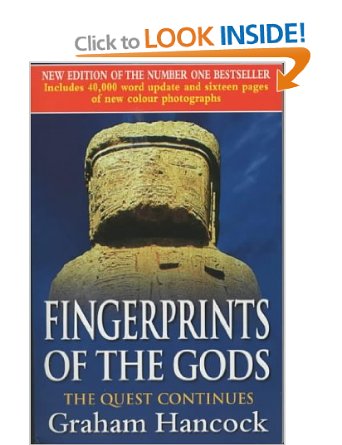
FingerPrintsThe first book I though of was Fingerprints of the Gods by Graham Hancock – mainly because I remember it being very ‘weighty’ every time I pulled it out from the bedside table to delve into another chapter (it is not the type of book you read in a single sitting). It also hurts a lot if you knock it off the bookshelf and it gets your toes – even in the paperback version I have!

The Blurb Fingerprints of the Gods is the revolutionary rewrite of history that has persuaded millions of readers throughout the world to change their preconceptions about the history behind modern society. An intellectual detective story, this unique history book directs probing questions at orthodox history, presenting disturbing new evidence that historians have tried – but failed – to explain.

This groundbreaking evidence includes:Accurate ancient maps that show the world as it last looked during the Ice Age, thousands of years before any civilisation capable of making such maps is supposed to have existed; evidence of the devastating scientific and astronomical information encoded into prehistoric myths; the incredible feat of the construction of the great pyramids of Egypt and of megalithic temples on the Giza plateau; the mysterious astronomical alignments of the pyramids and the Great Sphinx; the antediluvian geology of the Sphinx; the megalithic temples of the Andes; the myths of Viracocha and Quetzalcoatl….”

This was an interesting, albeit quite intense, semi-non-fiction book (depending on if you agree with the evidence of the historical re-write and the connections made). I found it really interesting as research for creating my own fictional mythologies for a book series I’ve been dabbling with for several years – The Elementals – it gave me lots of ideas about how real myths and evidence can be turned to show a whole range of different possible explanations and world histories. Possibly not what the author intended, but that’s certainly how it was for me. But after all that, it only comes in at a measly 794 pages (according to Amazon).

There were a number of long books I tackled at uni, particularly on literary theory and criticism – one of the ones I enjoyed the most was the core text which introduced a range of approaches and schools of criticism: from Freud to Marx, Bakhtin to the masculine ‘gaze’ of cinema – there was a lot to get through in  them. But, a cursory look at Amazon tells me that they hit a mere 587 pages – not as long as it seemed at the time!

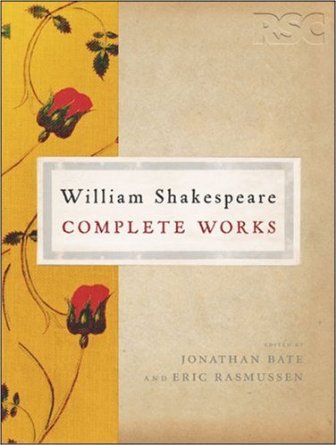
ShakespeareTo win this challenge, it had to be the heavy-weight of English literature… So, I just toddled off to the bookcase to check and, oh yes, at 2552 pages, the Complete Works of Shakespeare, by the RSC, with additional essays on each play MUST be the longest book I’ve ever read. Admittedly, it’s a single book, gathering together a number of smaller works, but I’m hoping for the sake of the challenge that it counts. Unsurprisingly, I didn’t read it in a weekend! I read several of the plays and essays at uni for the unavoidable Shakespeare module – the ever-popular Hamlet, Romeo and JulietMacbeth and Twelth Night all making the cut, as well as some of the less popular ones, which I actually found I enjoyed more: Titus Andronicus (any revenge story you read after this pales is comparison to the awful retributions that are thrown around in this play); Troilus and Cressida, and Coriolanus. 

A few years ago I began reading the plays I hadn’t already covered, in the interest of being thorough as much as anything else – I read the rest of the history plays we hadn’t already covered: the ‘Richards’ were my favourites, esp. Richard II, if you like your kings to be drama queens 😉 I also did the sonnets, which I’d only ever read the ‘popular’ ones before.

So, although it took me around eight years to get through the entire book, I did manage it – and at 2552 pages has to ‘count’ as my longest book.

Day 16 – A Thought-Provoking Book


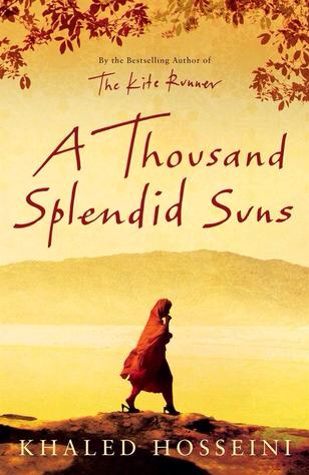
A Thousand Splendid Suns  was the second book I read by Khaled Hosseini – the first being the best selling Kiterunner.

Despite only having written a few books Hosseini is one of my absolute favourite authors: he writes so beautifully and realistically that you are transported completely to the places he takes you to, no matter how alien. He also delivers unflinchingly real characters, no matter if they are good or evil, beautiful or vile, they will make you feel 


Synopsis: “A Thousand Splendid Suns is a breathtaking story set against the volatile events of Afghanistan’s last thirty years—from the Soviet invasion to the reign of the Taliban to the post-Taliban rebuilding—that puts the violence, fear, hope, and faith of this country in intimate, human terms. It is a tale of two generations of characters brought jarringly together by the tragic sweep of war, where personal lives—the struggle to survive, raise a family, find happiness—are inextricable from the history playing out around them.

Propelled by the same storytelling instinct that made The Kite Runner a beloved classic, A Thousand Splendid Suns is at once a remarkable chronicle of three decades of Afghan history and a deeply moving account of family and friendship. It is a striking, heart-wrenching novel of an unforgiving time, an unlikely friendship, and an indestructible love—a stunning accomplishment.”

I found this a thought-provoking book on two counts: the setting in Afghanistan, over a number of years and ever-changing environment; and the female characters at the centre of the story.

Like many people, my knowledge of Afghanistan’s history is limited to what I’ve seen on TV over the past decade and odd elements prior to that with with Soviet invasion and British before that. This book brings the world to life – just as The Kiterunner did – the people that live there, how they live, what is different to my life and sometimes surprisingly, what is the same. A world that you think you know, is brought to life, more completely and realistically through the characters you meet.

Where The Kiterunner is a story about one man’s life and (mainly) the men around him – Splendid Suns is about a female experience: a young girl growing up in a family with academic parents (both of them), and how that changes as the country moves from one regime to another. I was struck over and over again by this book at the depth and variety female relationships can take – the hardships they can endure and how they find strength to protect the very dearest things they possess. The ‘wives’ story at the centre of the narrative is heart-breaking, and the bond they share through their similar experiences is something that I would never have imagined, but also found completely believable. There is a ‘love story’ entwined through the other narratives of the book – but the indestructible love of the blurb is that of family, motherhood and sisterhood, rather than romantic. The honesty of feeling throughout the story, both good and bad, is so clear that I believe few would read this book and not find it thought-provoking. It challenges you – possibly as a ‘western’ reader, to review what you believe about the place you see on the TV – and it certainly sent me out to read more about the history and environment of the book I had enjoyed so much.